
Complete Guide to Selling Coins in Sydney
Top Gold Team · 2 December 2025
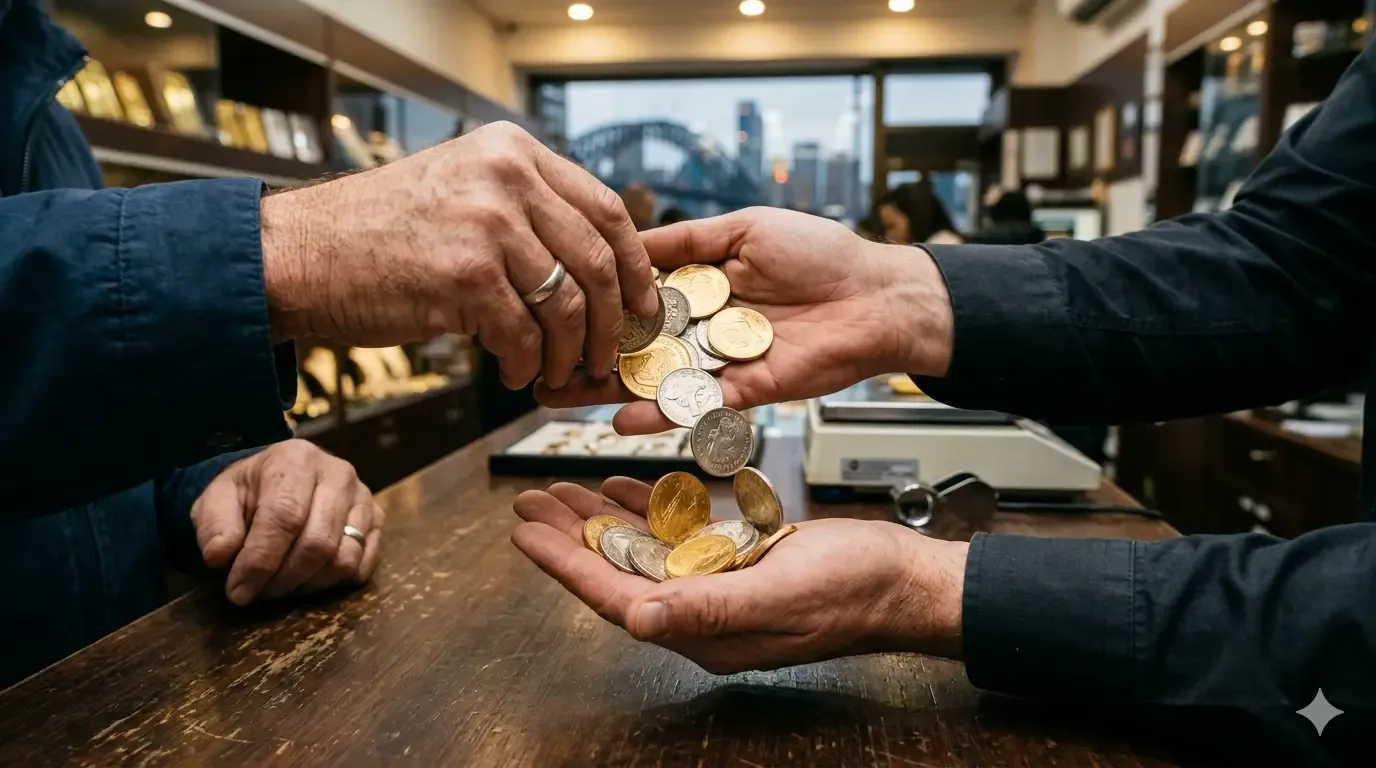
Coins fall into two broad categories that get valued in completely different ways, and mixing them up is the most common mistake people make before selling.
Bullion coins: valued on metal content
Bullion coins, Australian Kangaroos, Krugerrands, American Eagles, Britannias, and similar, are produced primarily as an investment vehicle. Their value tracks the current spot price of the gold or silver they contain, plus a small premium.
These are the most straightforward to value. Weight, purity (usually stated on the coin itself, though we verify with XRF testing regardless), and the live spot rate at the time of sale give you the number.
Collectible and numismatic coins: valued on rarity too
Older coins, limited mintages, and pieces in exceptional condition can carry a numismatic premium above their metal content. A pre-decimal Australian coin, for instance, might be worth more to a collector than its silver content alone would suggest.
This is where a lot of people either overestimate or underestimate what they have. Not every old coin is valuable, condition and actual rarity matter enormously, but it’s worth having anything unusual properly assessed rather than assuming it’s just scrap.
Inherited and mixed collections
This is one of the most common situations we see. Someone inherits a box or album of coins built up over decades, with no clear sense of what’s actually in it. Our approach is to sort and value each coin individually rather than offering a single lump sum for the lot, since a collection like this often contains a genuine mix of bullion, common circulated coins, and the occasional more valuable piece.
Bringing the whole collection in, even coins you assume are worthless, is worth doing. Sorting it yourself beforehand isn’t necessary and isn’t likely to be as accurate as a proper assessment.
What to bring
Photo ID is required for any sale under NSW second-hand dealer regulations. Beyond that, bring the coins as they are. Certificates of authenticity or original packaging can support a valuation on rarer pieces but aren’t required to sell.
What determines the final price
For bullion: purity, weight, and the live spot rate.
For collectibles: condition, mint year, rarity, and current collector demand, on top of the base metal value.
For mixed collections: each coin assessed on its own merits, not averaged across the group.
A note on damaged or worn coins
Wear reduces numismatic value more than it reduces bullion value. A worn bullion coin is still priced mainly on its metal content. A worn collectible coin loses more of its premium, since condition is a major factor in numismatic pricing.
Have a coin collection you’re not sure about? Bring it in for a free, itemised valuation. Contact us or visit our Ryde store.